

Having exhausted every other possibility I could think of, in search of river walks, I did not have high expectations for Colne Brook, a distributary of the River Colne, the ancient border between Middlesex and Buckinghamshire. I’d been nearby, elsewhere in the Colne Valley, and had therefore forgotten about Colne Brook, but this in itself should have told me that it would be special, since the walks are in pursuit of the uncanny, the cursed, the Ballardian, and the forgotten. To mark the completion of an at best quixotic project – ‘45 Good Long Walks on Waterways in or Near London’ – here are some field notes on the finest brook to be found anywhere between Uxbridge and Staines.
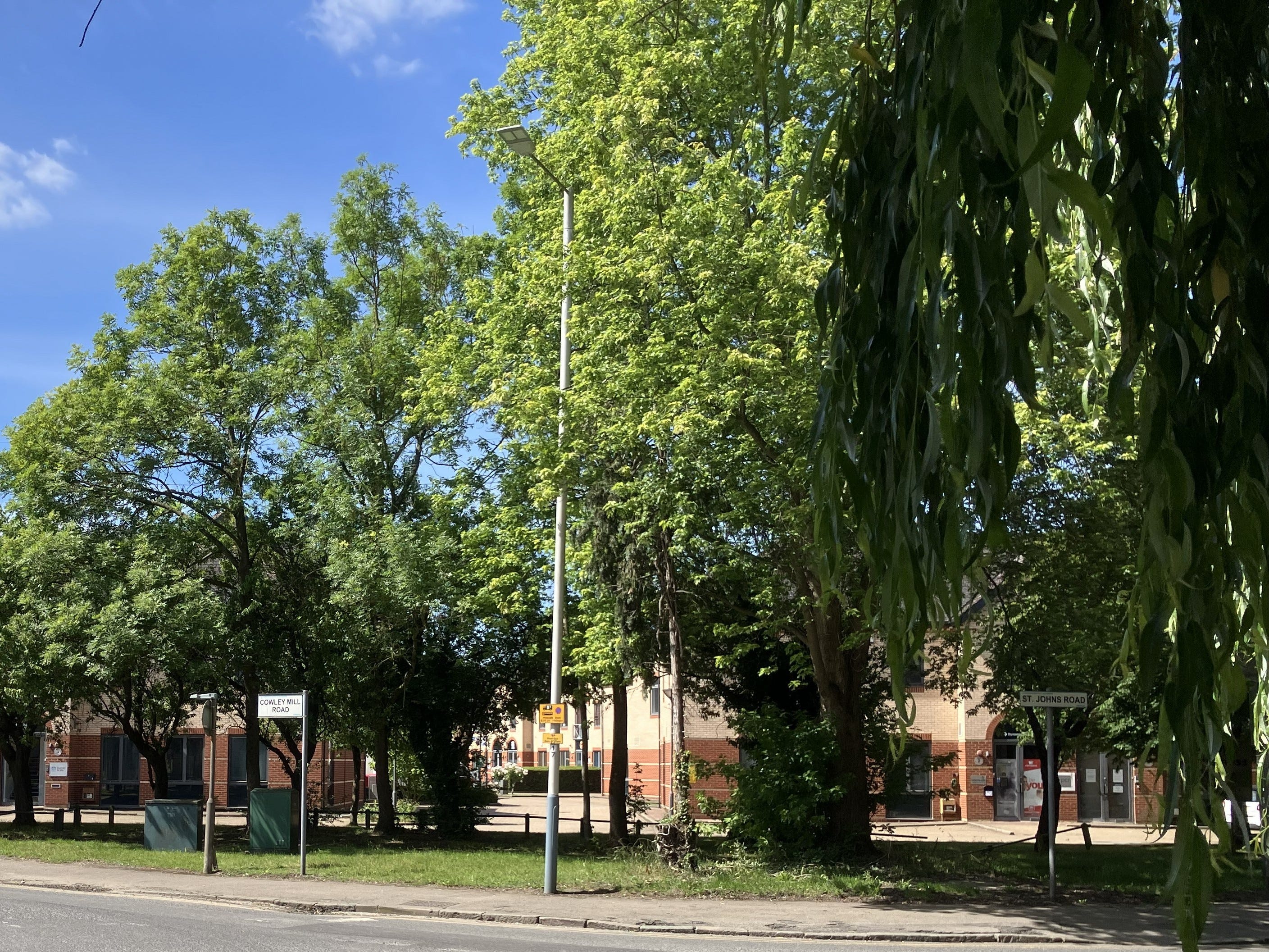
Cowley Mill Road, an opportunity to think wistfully of the River Isle of Cowley Mill in Fray’s River:
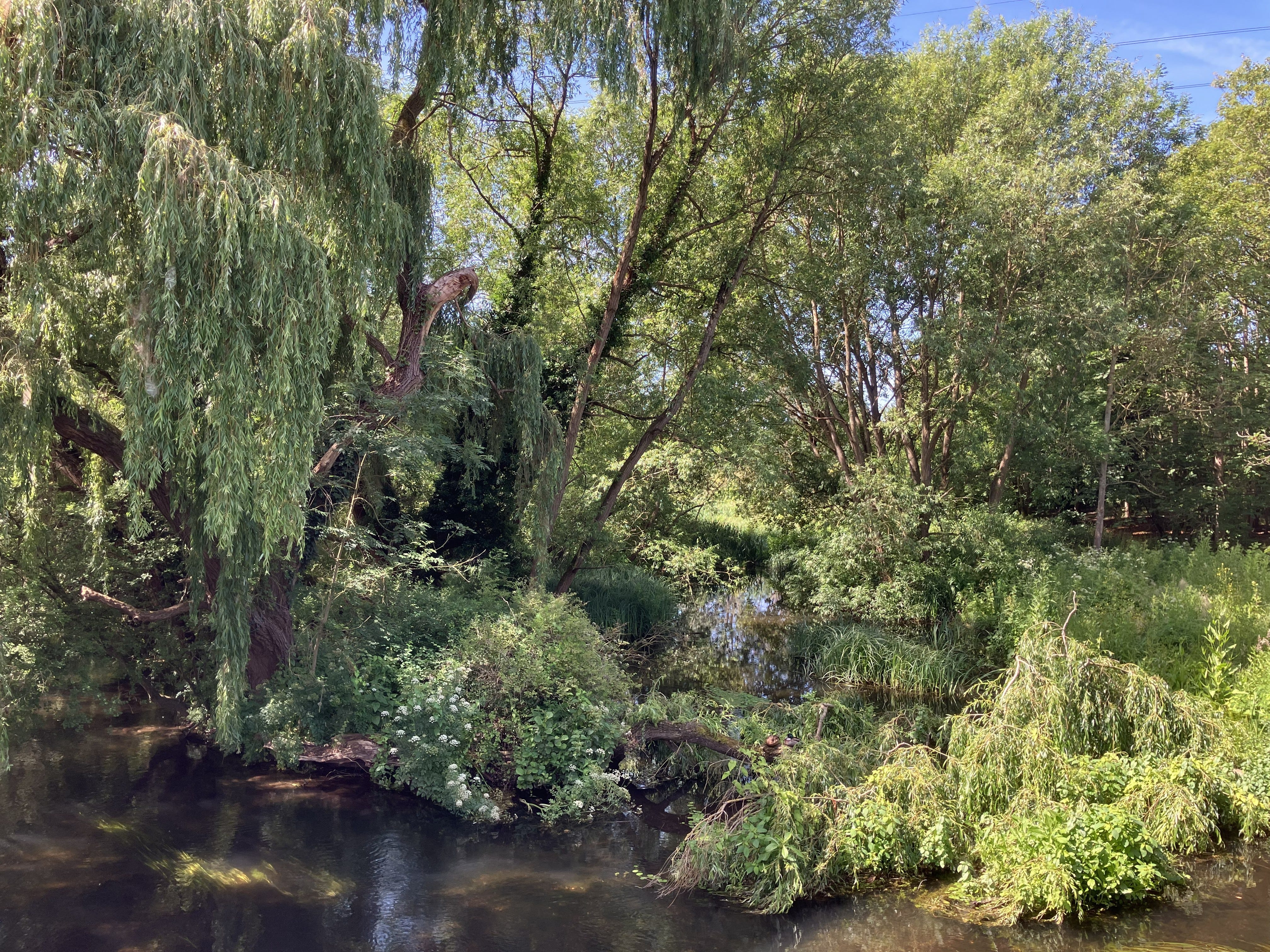
Join Colne Brook where it splits from the Colne…
…and proceed through a jungle of Japanese knotweed:
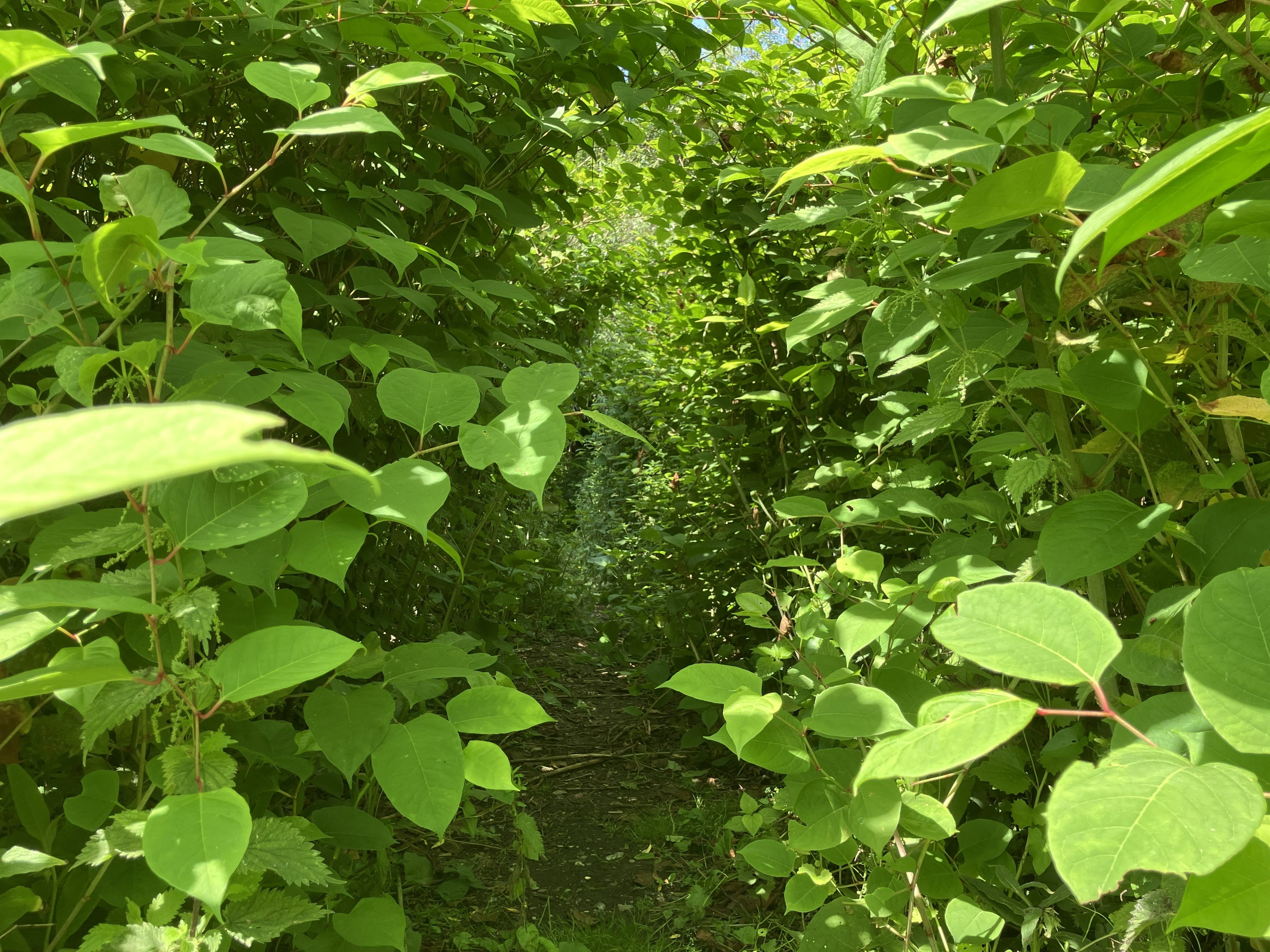
Take note, Buckinghamshire Council, of the relevant sections of the Wildlife and Countryside Act 1981.
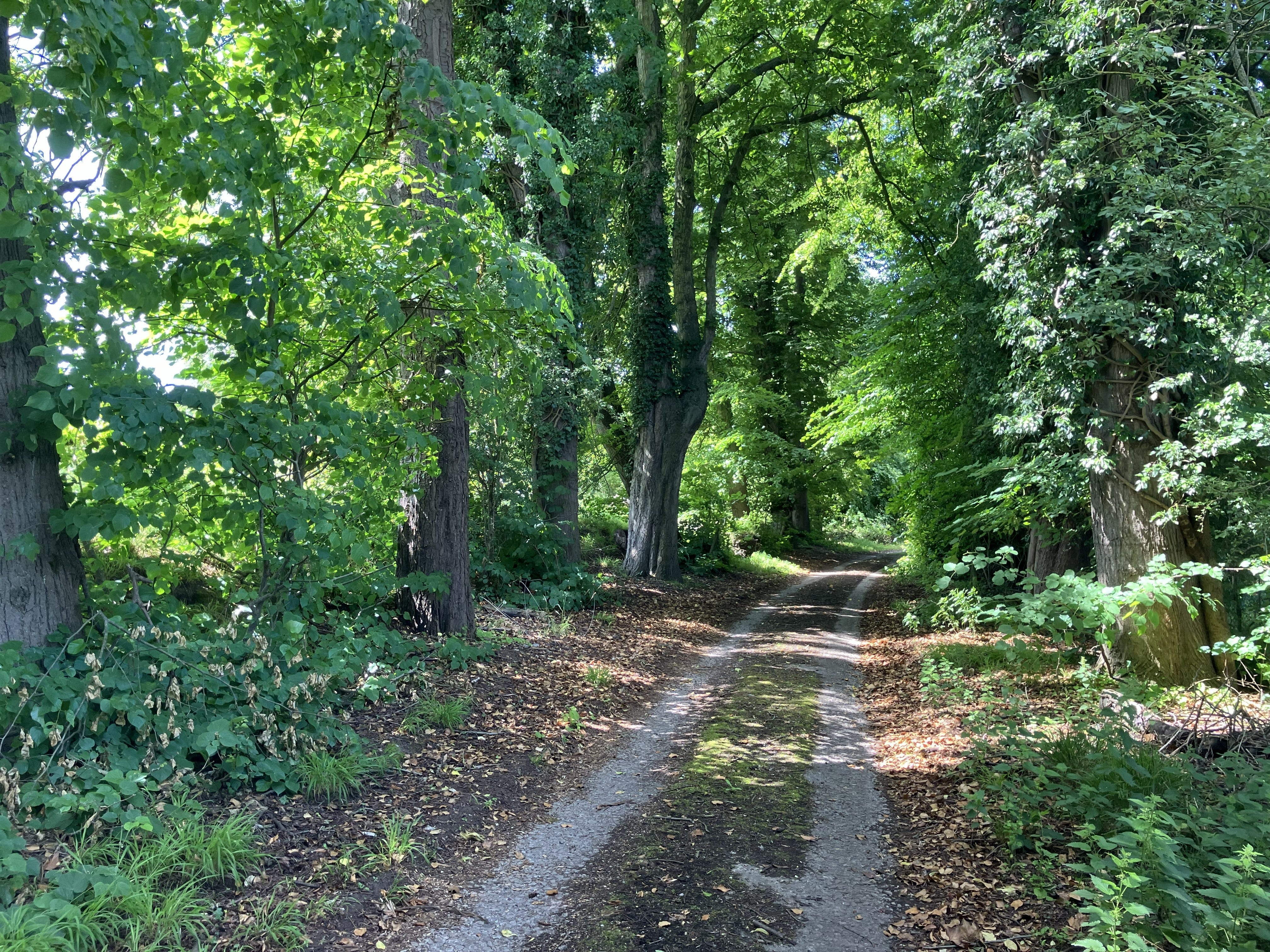
A farm track to the M25:
Here the river walker is exhorted to use a certain ‘footpath’:


The footpath in question, under eight lanes of motorway, is possibly the wackiest I’ve ever seen. The clearance begins a bit below shoulder height and then shrinks like Dead Man’s Walk, the passage in Newgate along which condemned prisoners walked to be hanged:


Some respite, albeit along a nettly path:
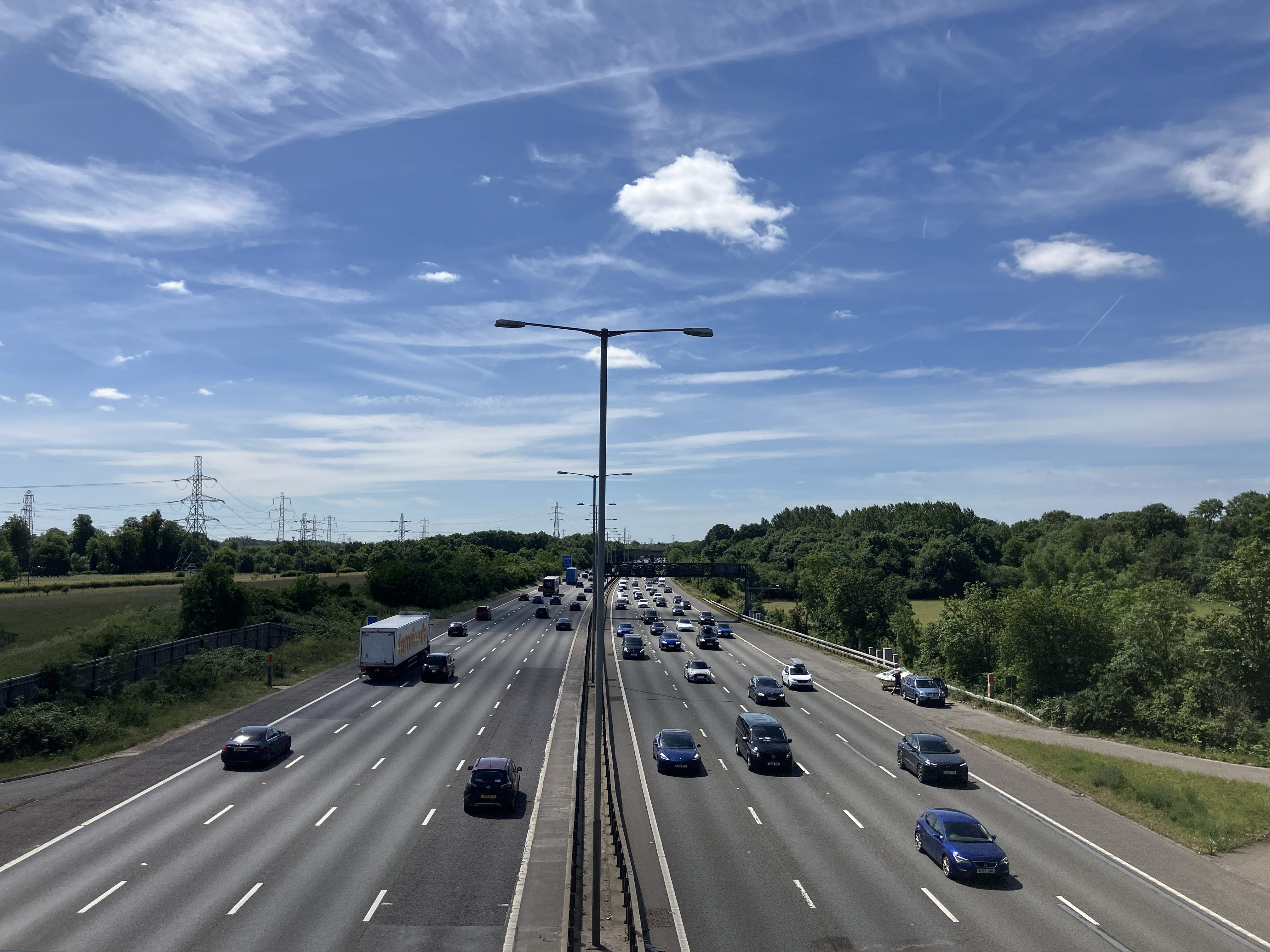
If I may paraphrase Alan Partridge, crossing a footbridge over the M25 is always a thrilling experience:
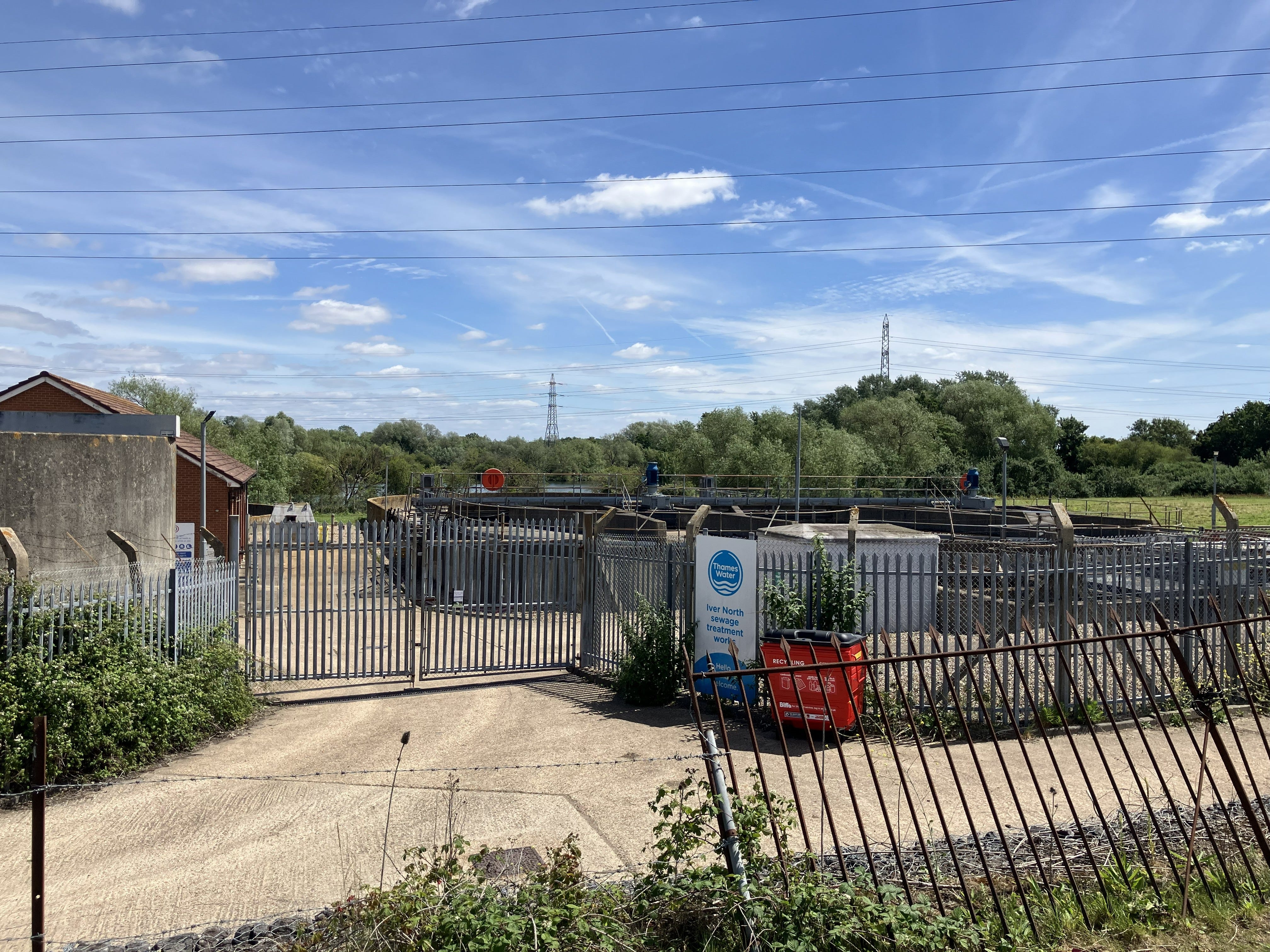
Though on this occasion doing so was futile, since Iver North sewage treatment works are dead on a Sunday – socially and literally a cul-de-sac:
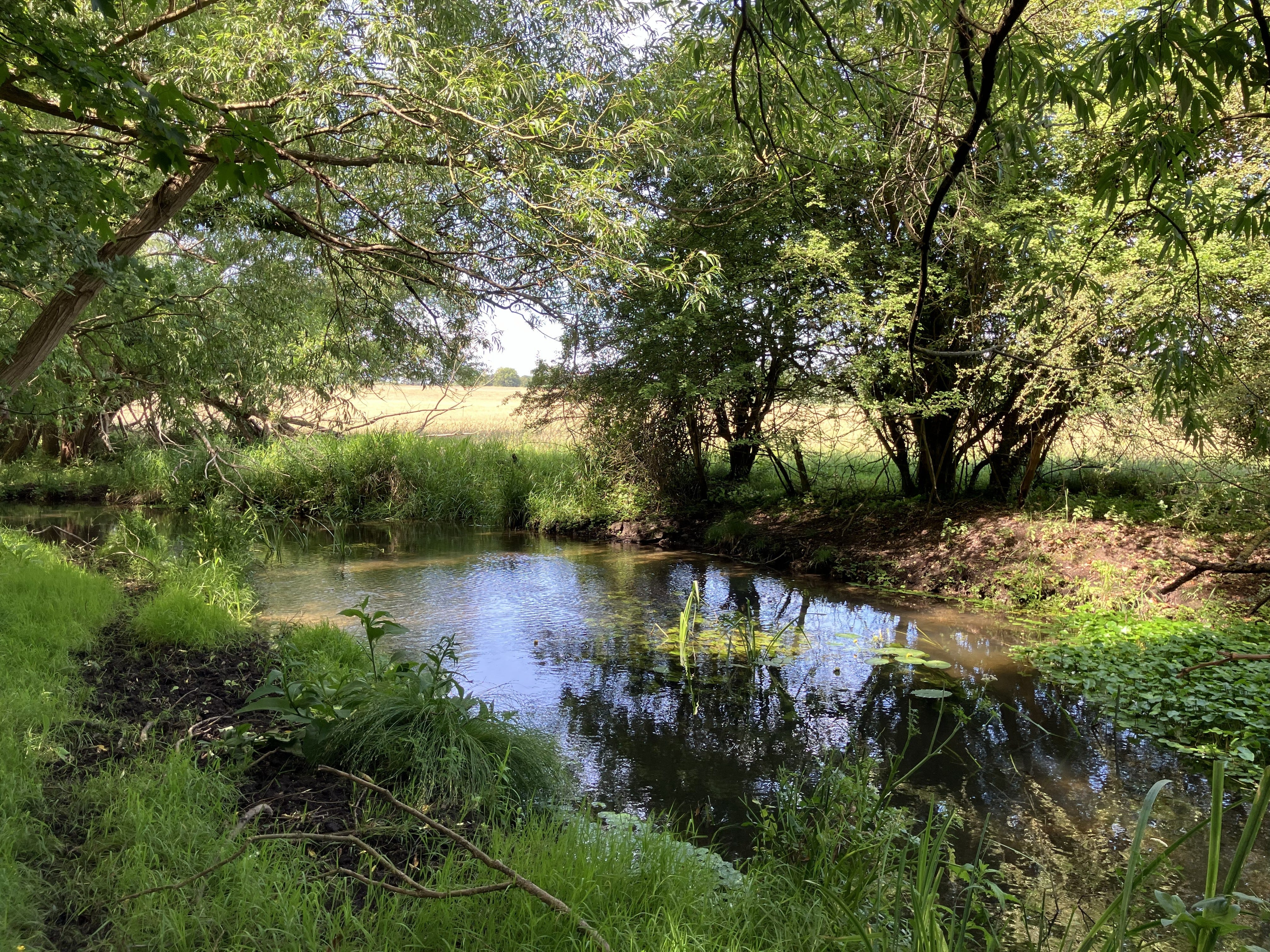
Cool:
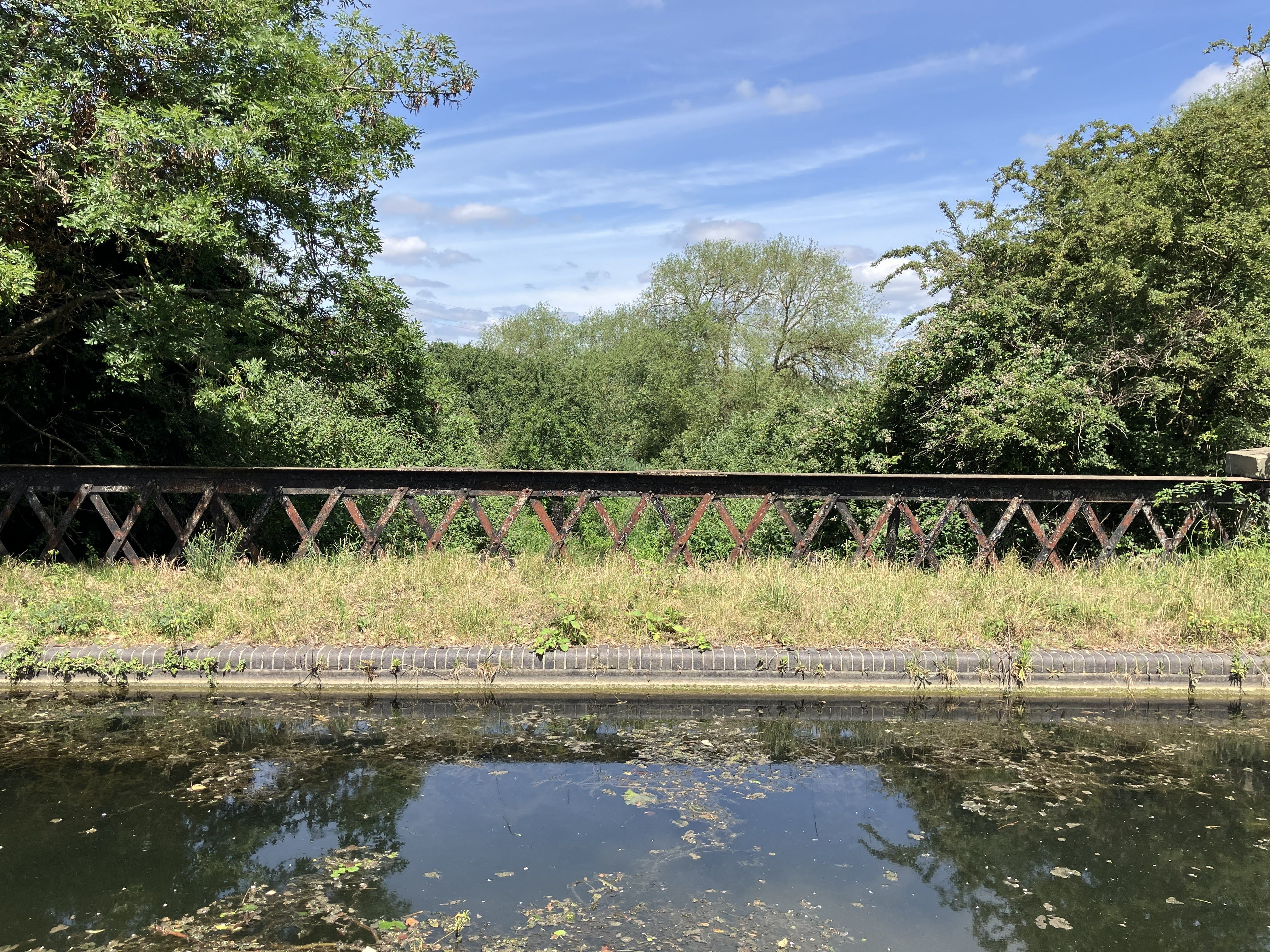
Hello, Slough arm of the Grand Union Canal, my old friend:
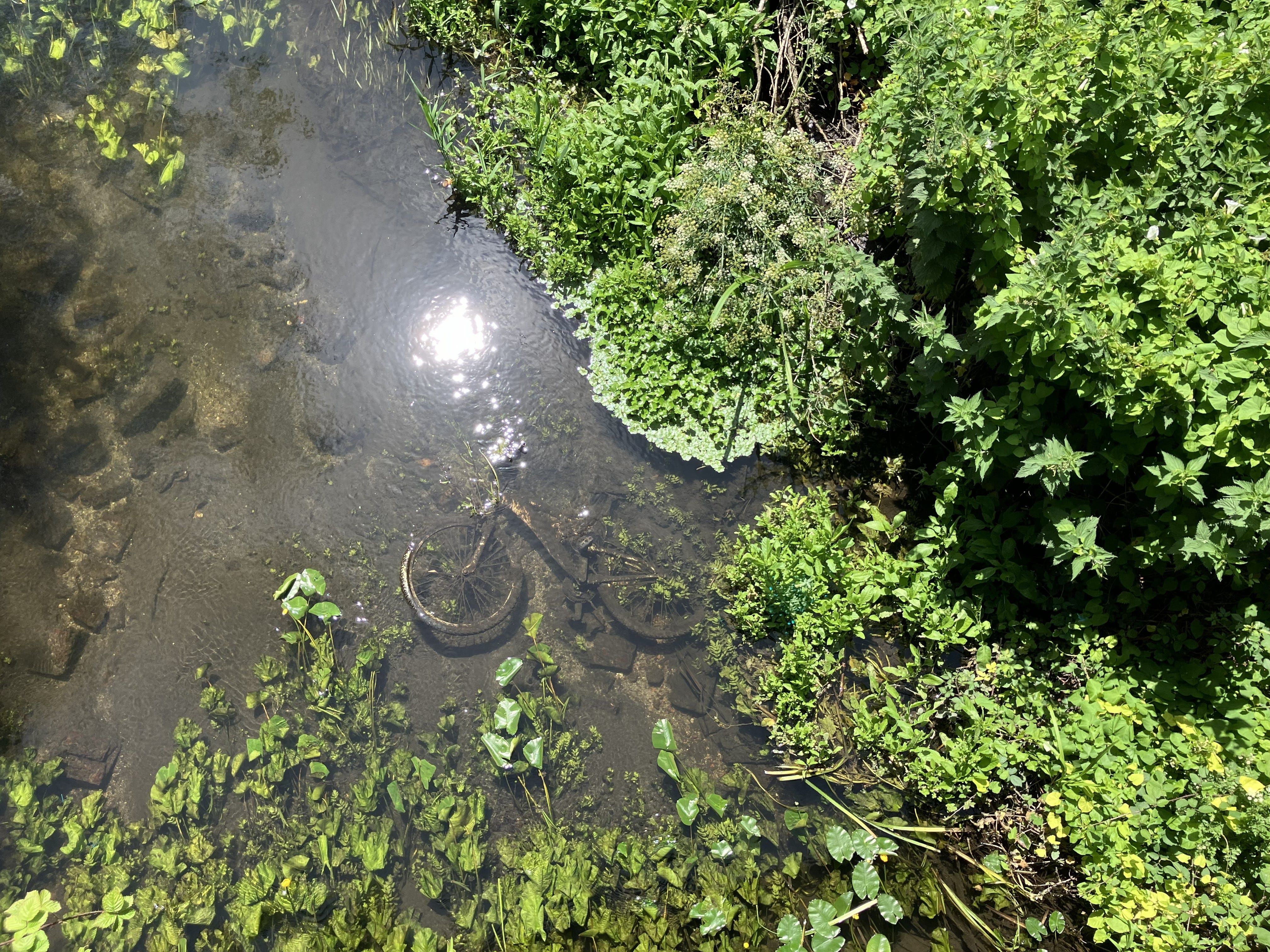
Sadly not a Lime bike in the river below:
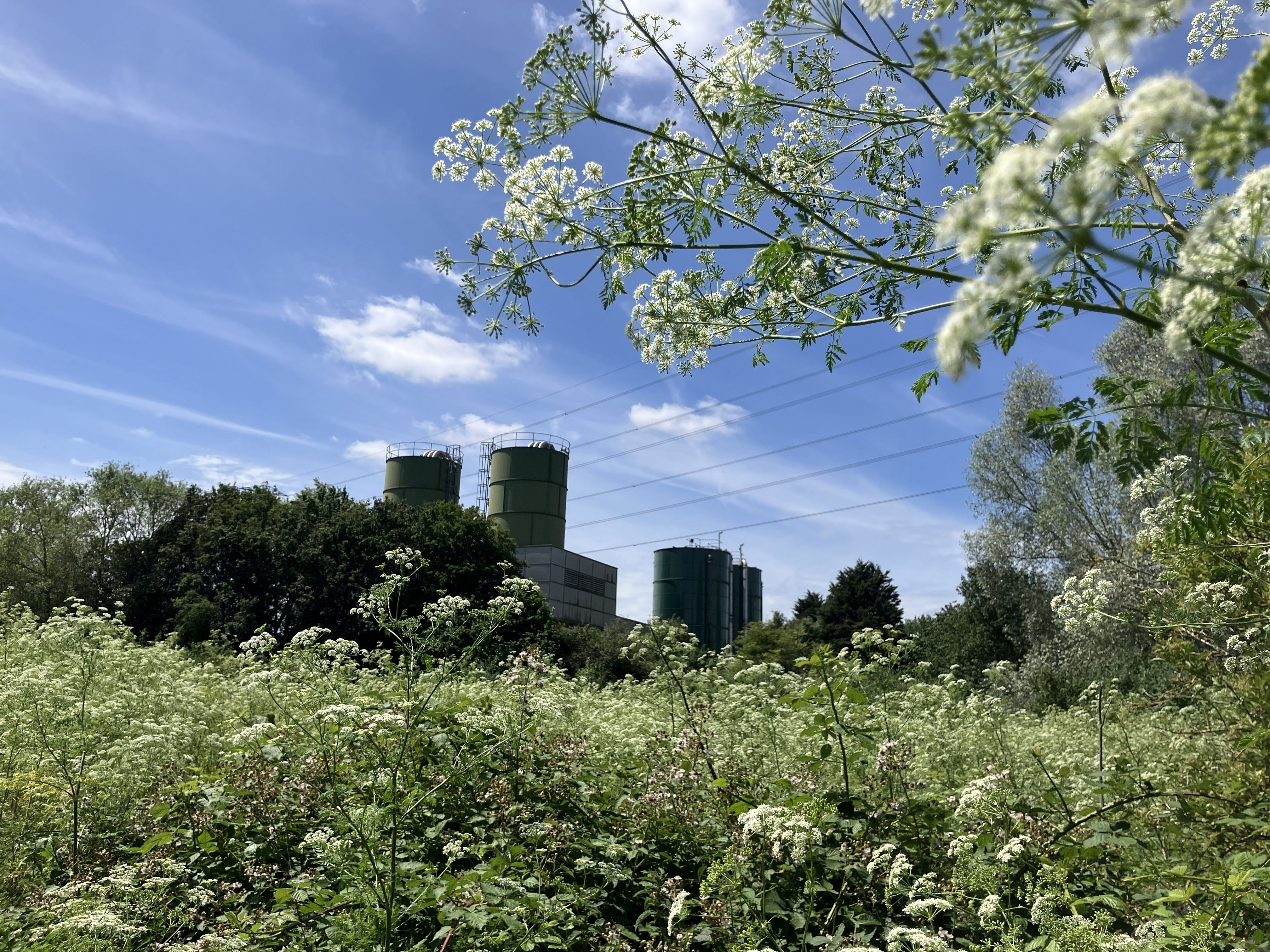
Inhale the heady odours of blossoming cow parsley:
Hello, Great Western main line, my old friend:
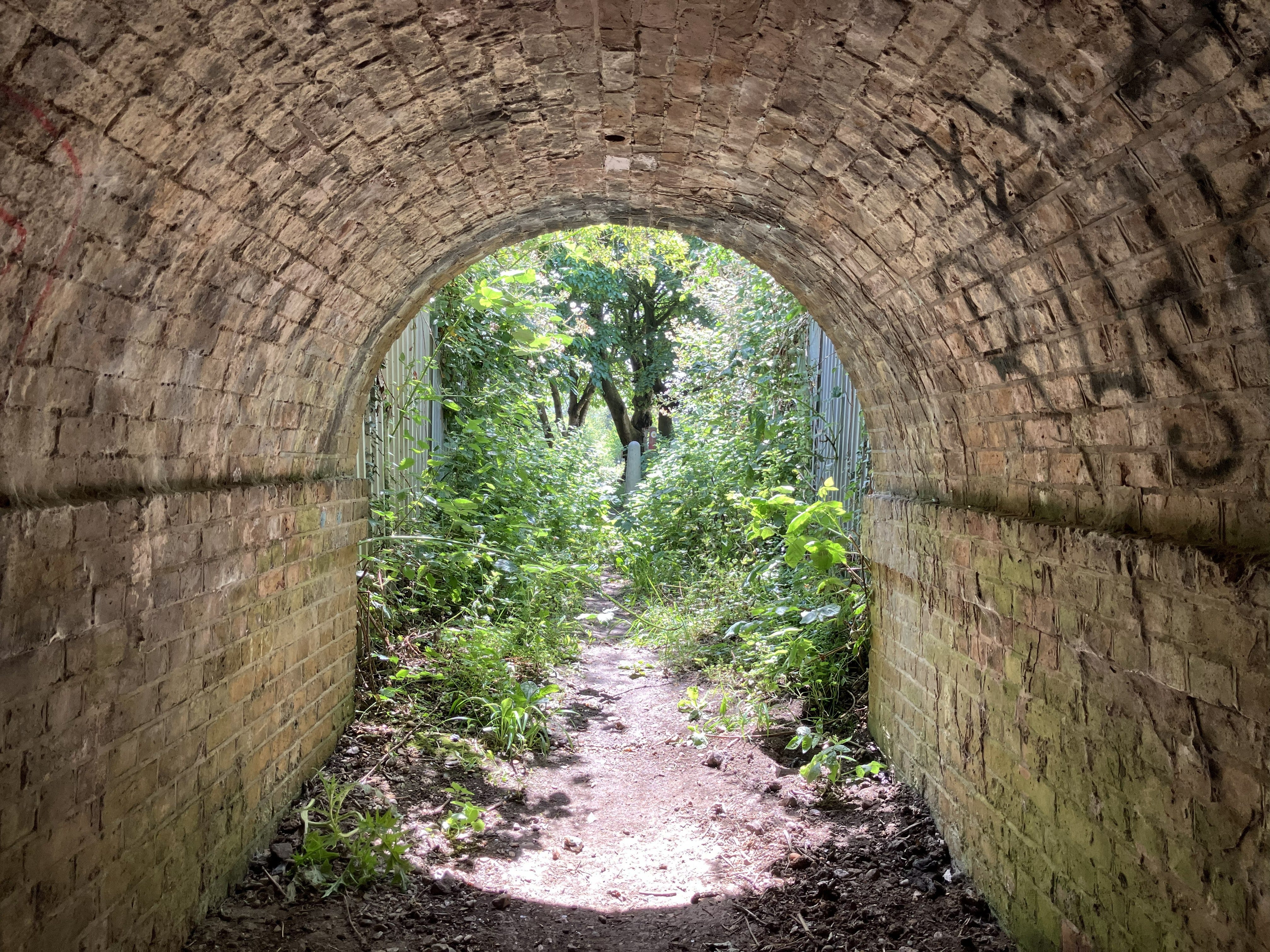
Since I was last here, walking the Colne Valley Trail, someone has painted over a rather good depiction of the Mask. It’s such a shame when artistic vandalism gets vandalised:


Someone has tried to block the path next to the Thorney Interchange – shoddy in both senses:
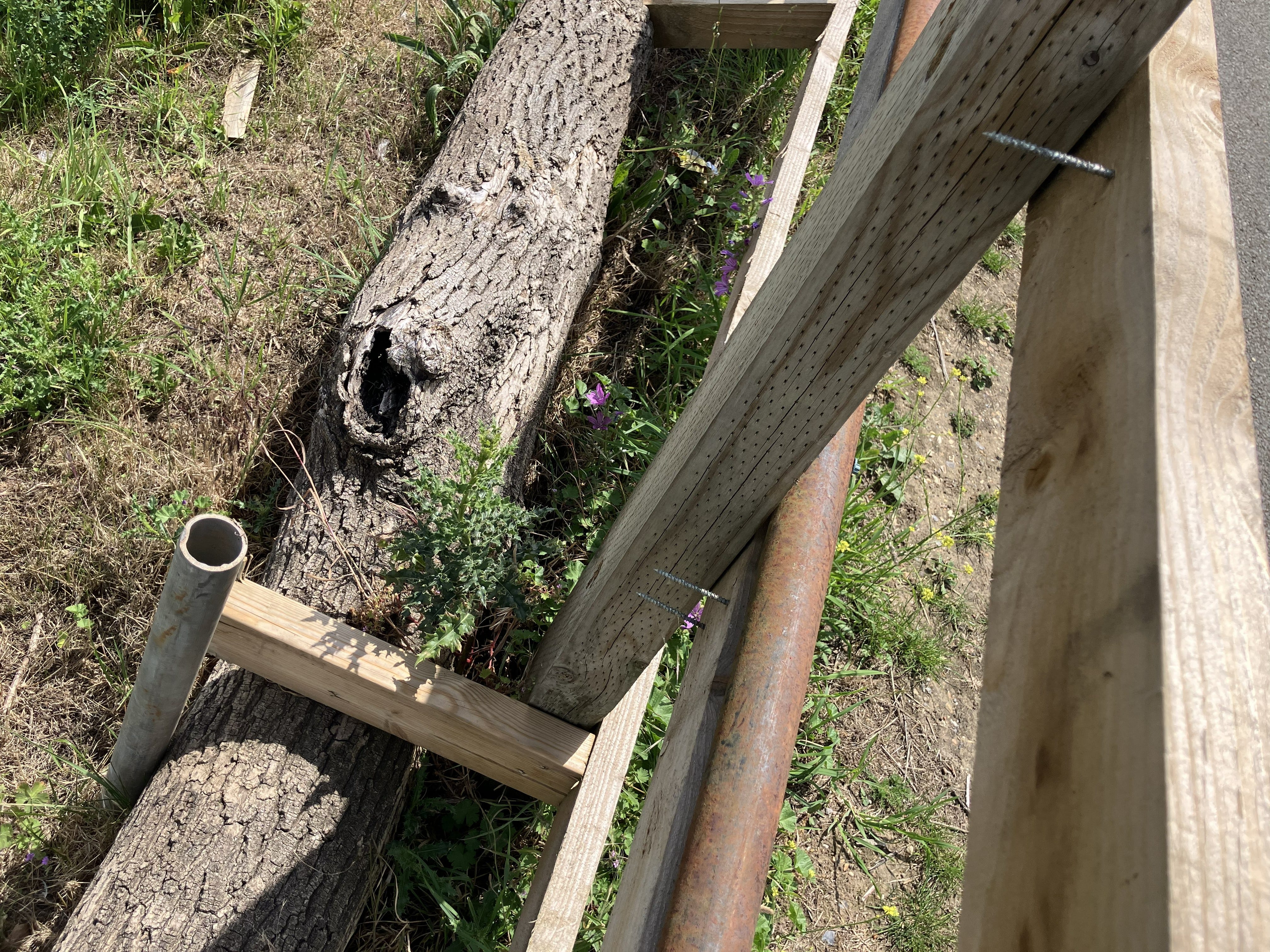
Take note, Buckinghamshire Council, of the relevant sections of the Highways Act 1980.
In lieu of photos of Colnbrook village, facts. ‘The road that now runs from Hyde Park Corner to Piccadilly Circus [viz. Piccadilly] was part of an ancient route known as “the way to Colnbrook”’ (Brewer’s Dictionary of London Phrase and Fable). I think this is because it was on the Bath Road and there were coaching inns there. In 1107 the name was recorded as ‘Colebroc’ – surprisingly nothing to do with Colne Brook, but meaning ‘brook of a man called Cola’ (A Dictionary of British Place Names). Circa 1990 the Coca-Cola Company set up a warehouse and logistics facility in the area. Coincidence?
The path to Berkyn Manor Farm, where Milton lived from 1635 to 38, is partially blocked. This looks like it is also an intentional blocking, probably to discourage old children on motorbikes:


Hello, what’s gone on here?
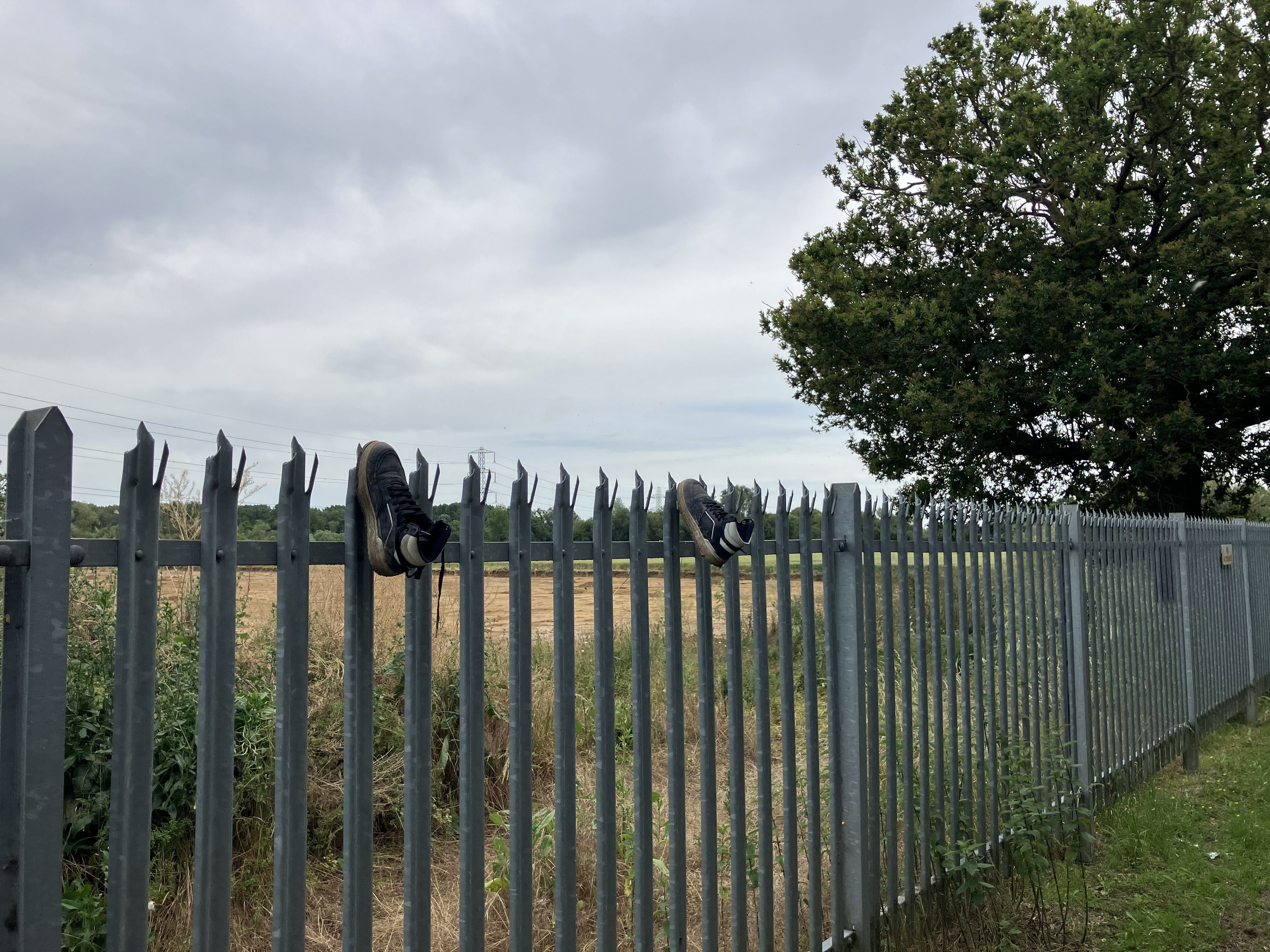
Before you get to the skip yard, pass a guard horse:
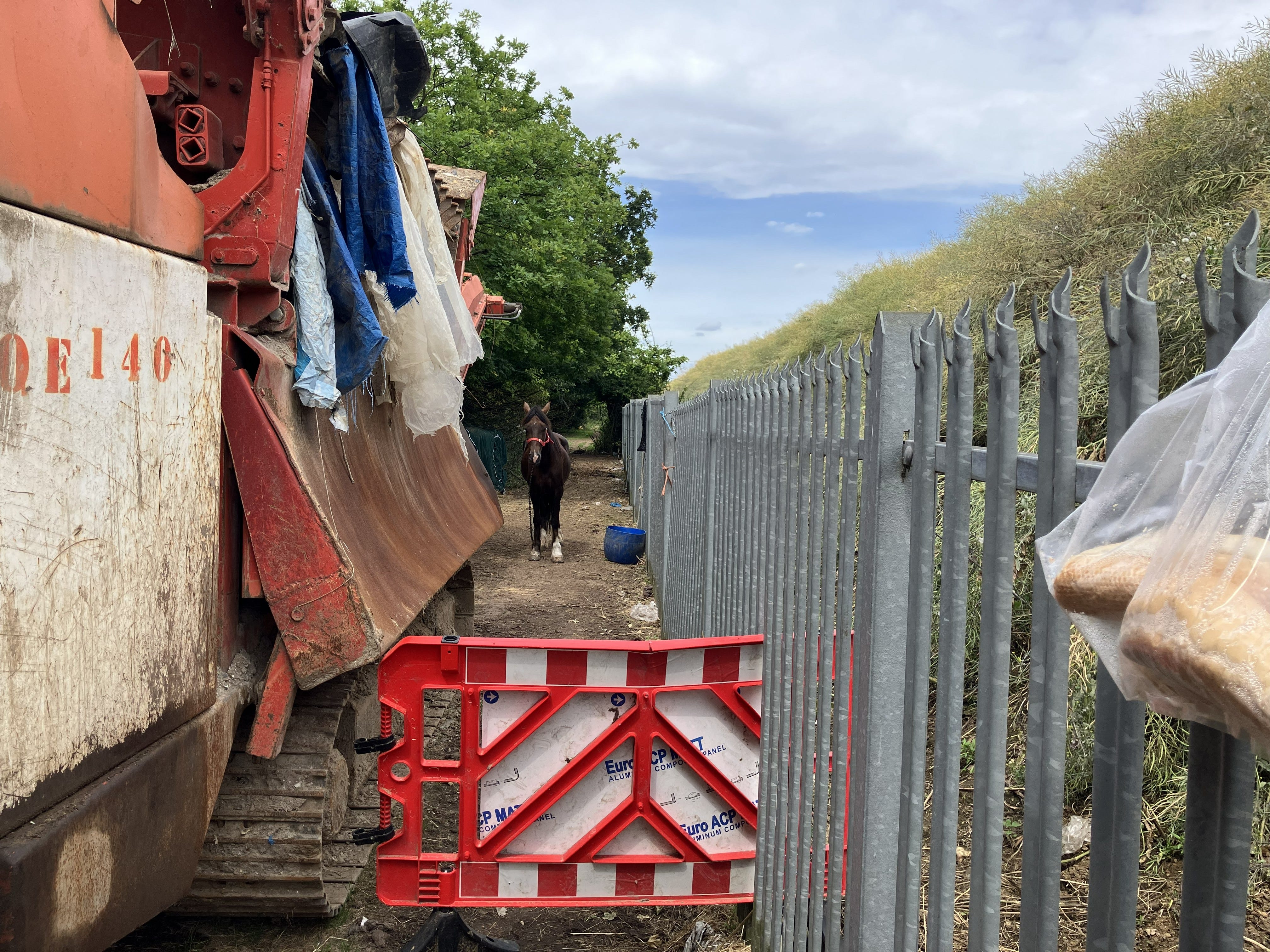
Hence, vain deluding joys,
The brood of folly without father bred. (John Milton, ‘Il Penseroso’)
On this spot occurred a tremendous piece of redneckery:
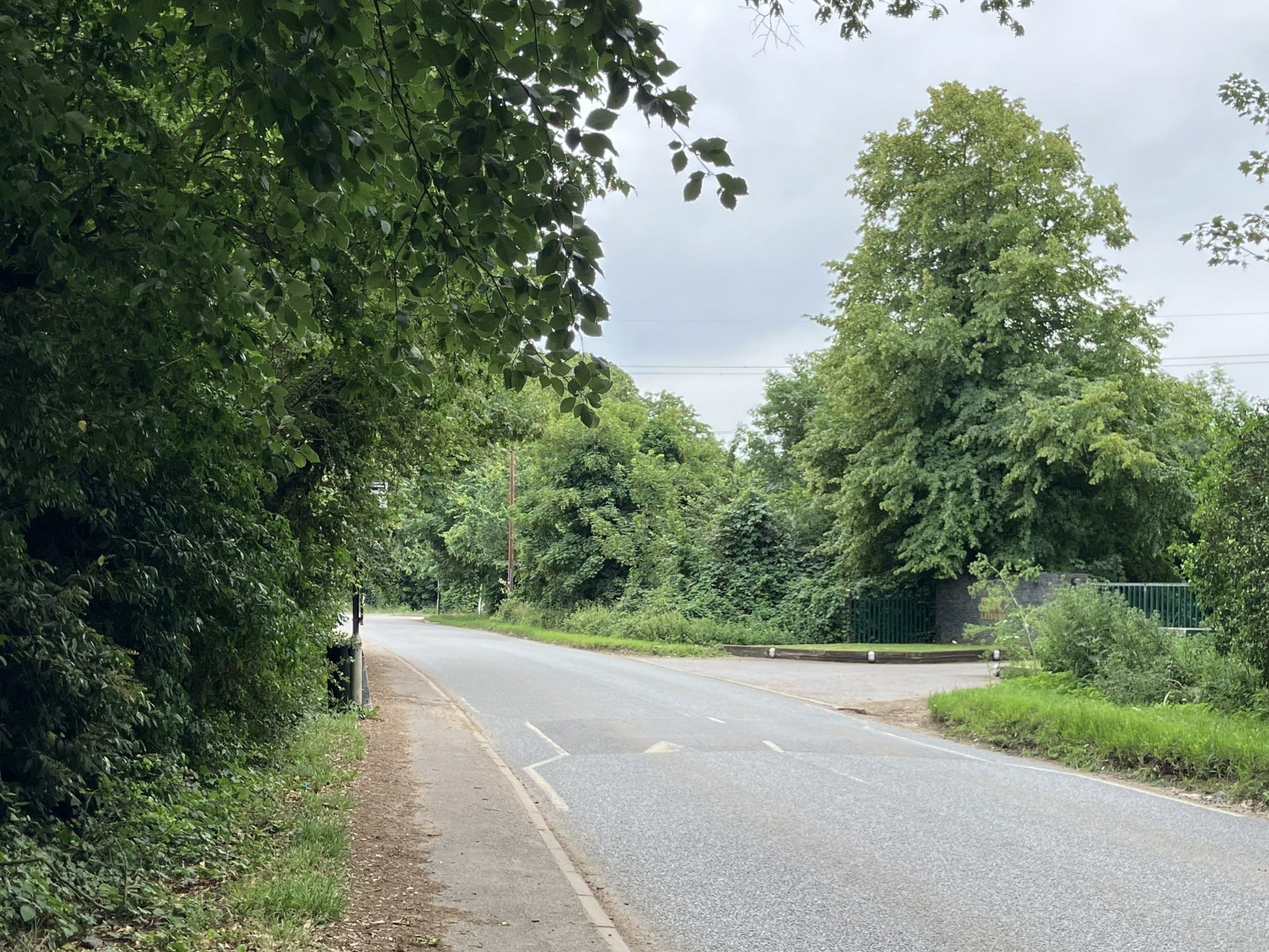
Without slowing down, the driver made use of the bus stop’s dropped kerb to mount the pavement and thus avoid the speed bump. This is not what Kenneth Clarke envisioned, but life finds a way.
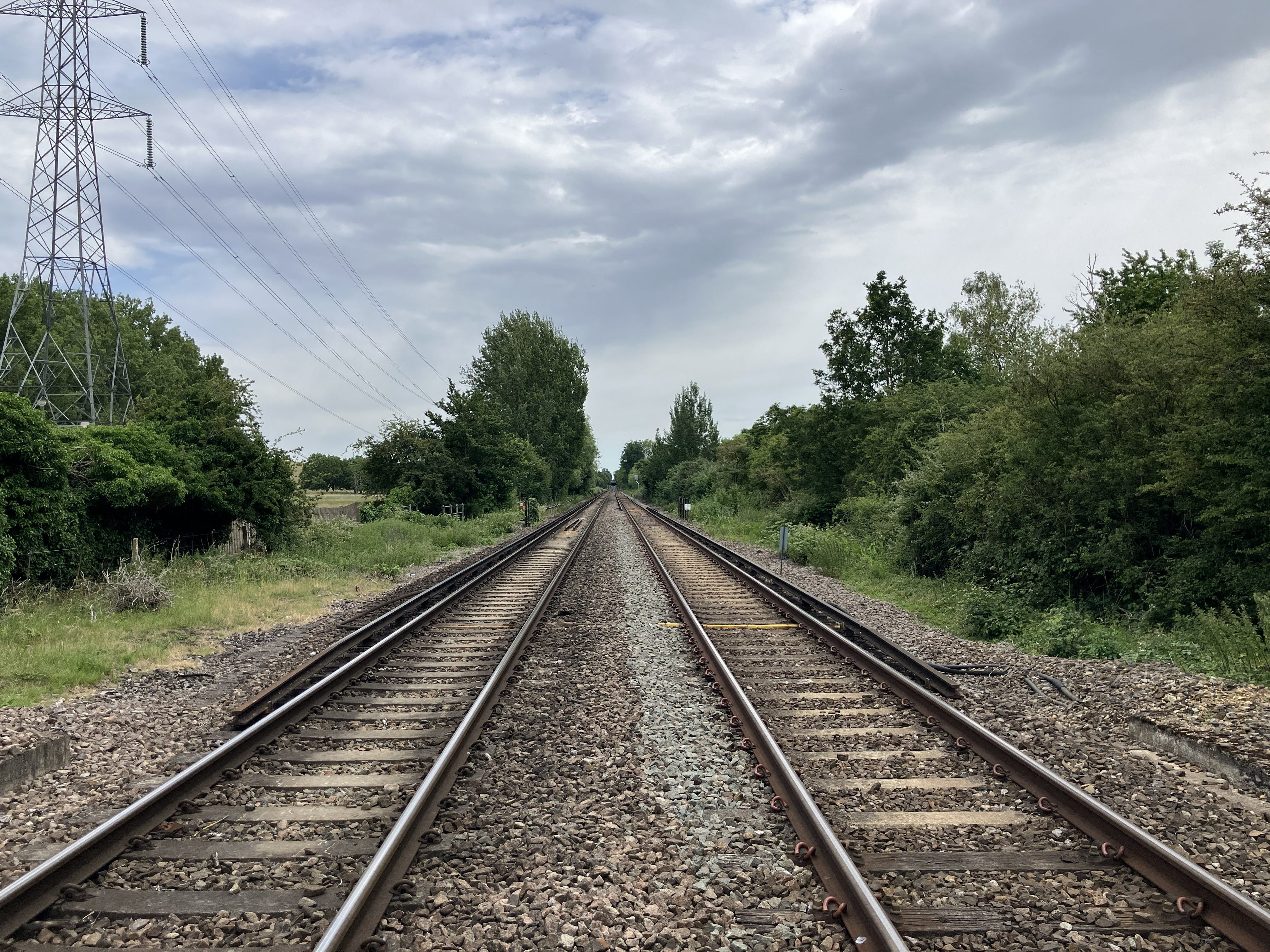
Level crossing at Wraysbury Lakes:
A Lidl trolley at the very least 1.5 miles from home:
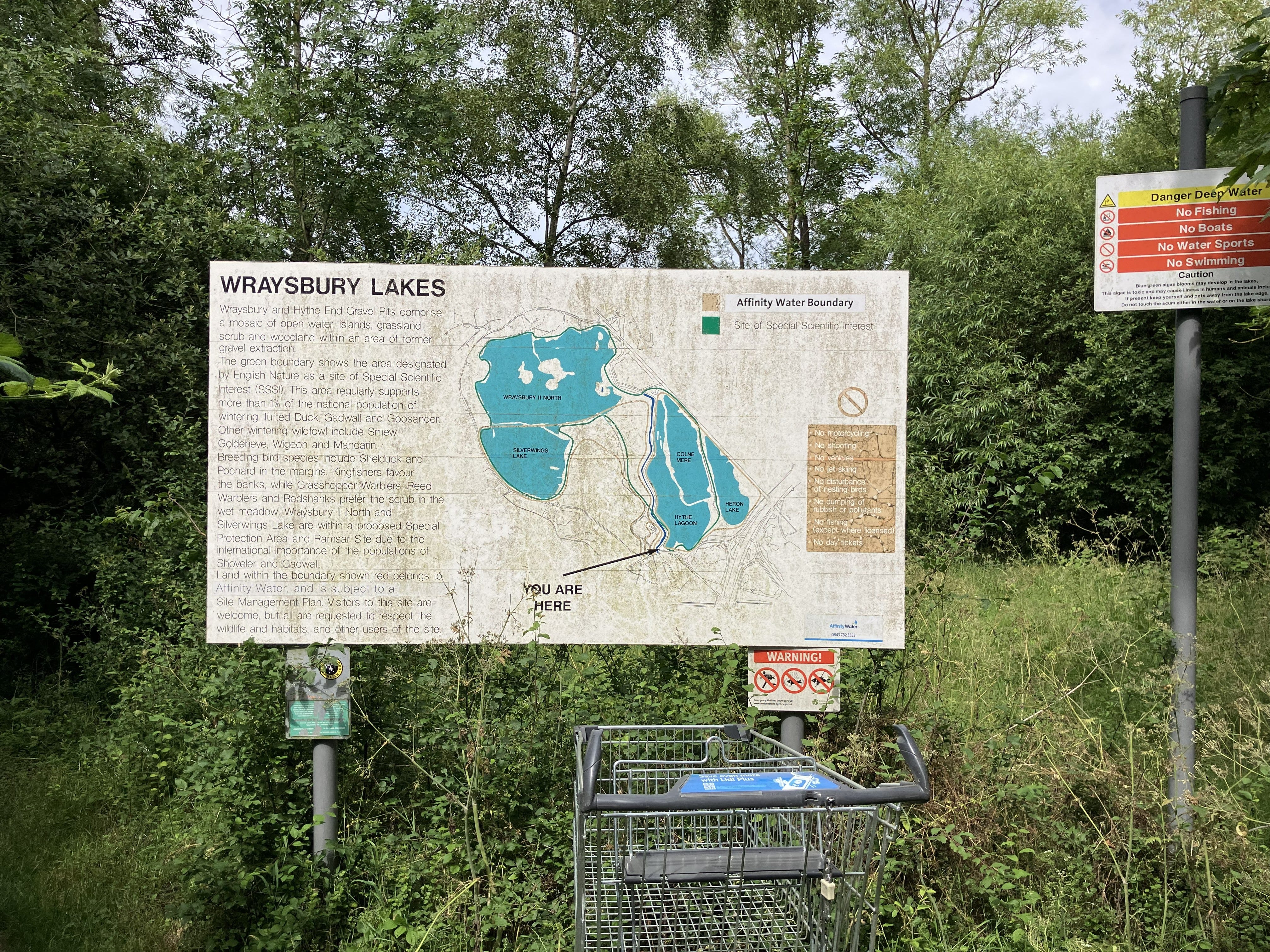
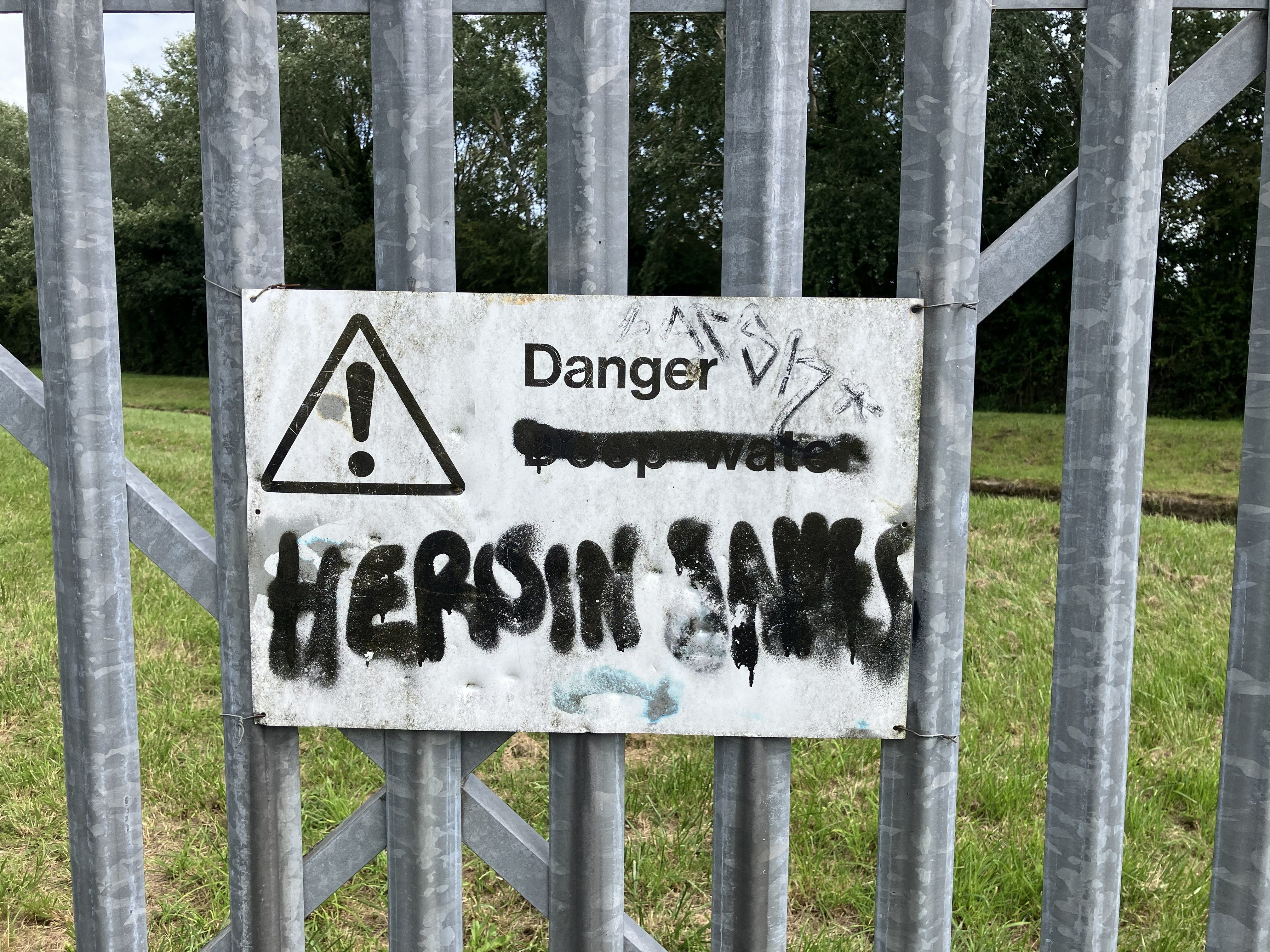
Helpful:
In his short story ‘The Waiting Grounds’, the genie of Shepperton, J. G. Ballard, asks the question, ‘where would you like to be when the world ends?’ After thinking about it for seven years, the narrator says that ‘a satisfactory answer contains an acceptable statement of one’s philosophy and beliefs, an adequate discharge of the one moral debt we owe ourselves and the universe’. Perhaps this means that if you knew where you would like to be when the world ends, you would know the meaning of life.
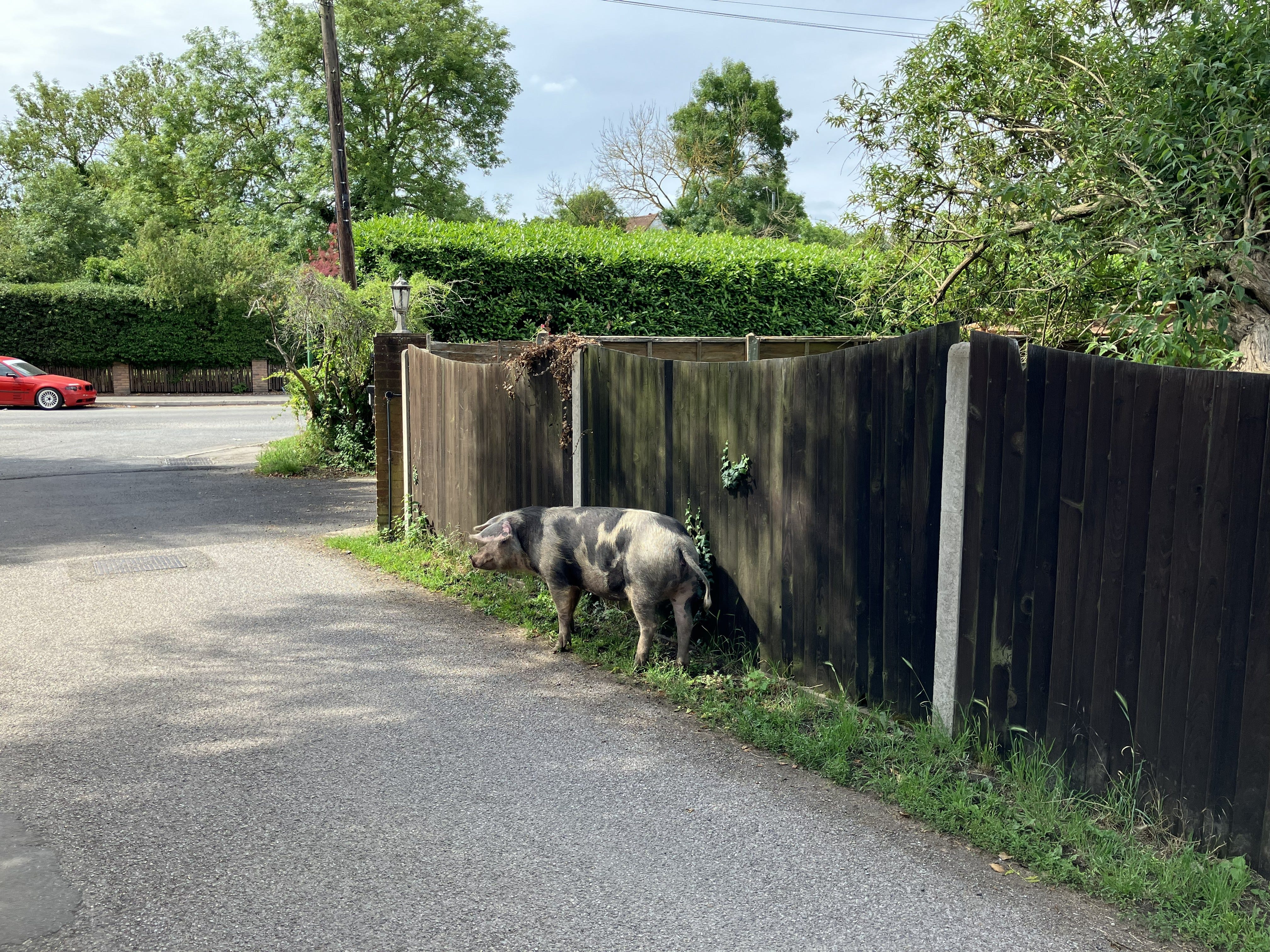
Colne Brook begins in a thicket of Japanese knotweed and ends by a car cemetery, a cursed boneyard just outside the M25. These waiting grounds are the appropriately named Hythe End – ‘hythe’ meaning ‘haven’ – the end of my waterwalks and a haven at the end of the world. I took a photo of the cars but it doesn’t capture the aura, so here instead is a pig seen in the vicinity:
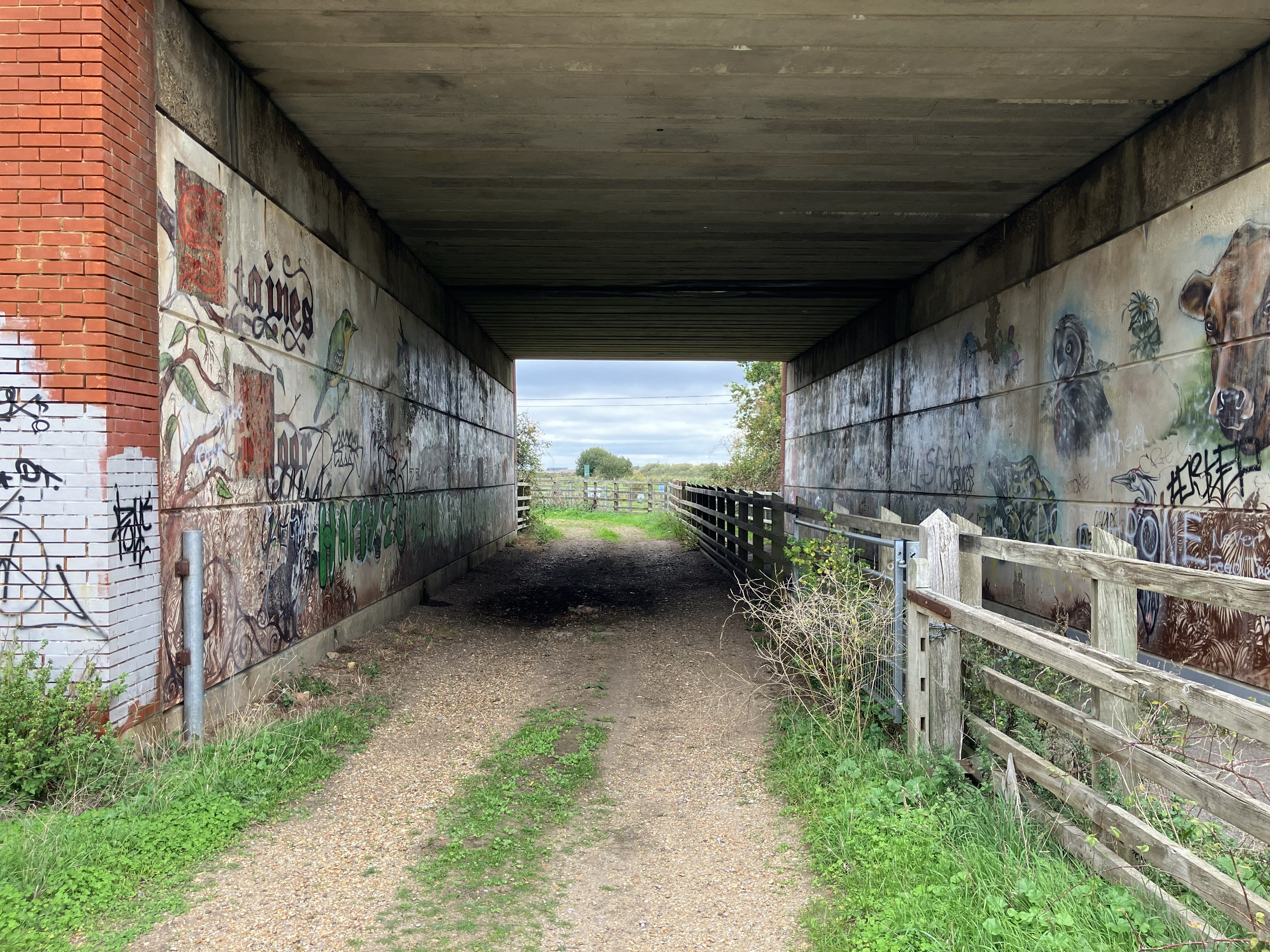
Finally, on your way into Staines – Nominative Determinism-upon-Thames – pass the tempting footpath to the ever-inspiring Staines Moor, and, if you don’t yet know where you would like to be when the world ends, head back out into the watery wilderness of the green belt’s grey zone.
Loved this Joshua! Great to meet you last week
Sam